Emergency Repairs · Newmarket
Off-Track Garage Door Reset
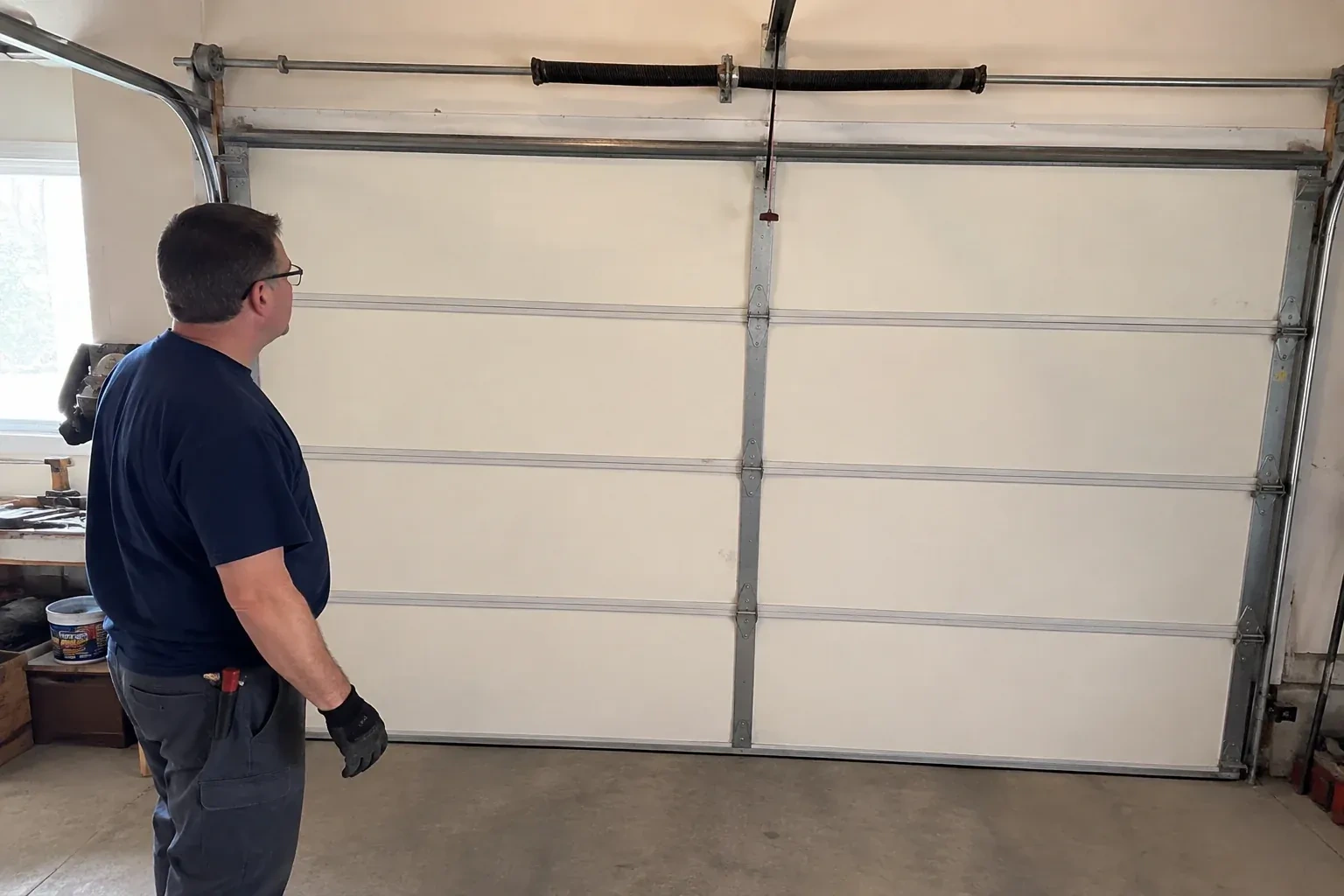
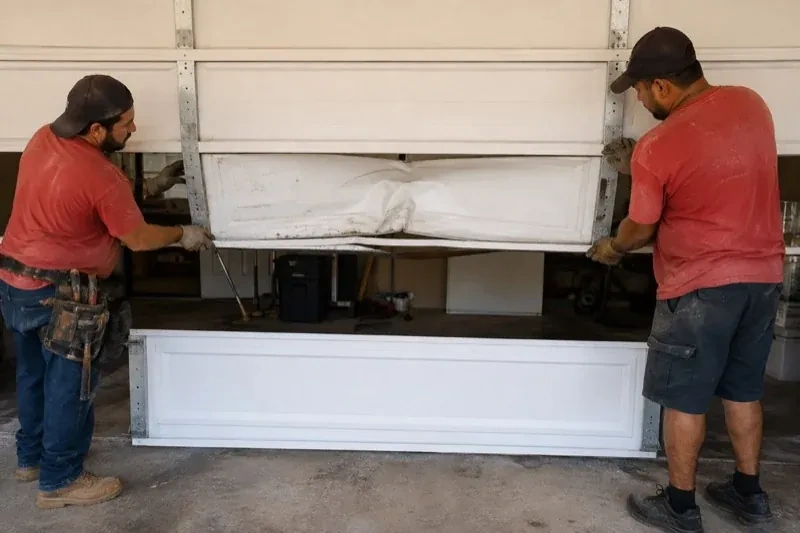
A delivery van backed into the shop's overhead door this afternoon. The lower panel is pushed in, the track on that side is kinked, and the door is hanging unevenly with staff unable to close up for the night.
Call now · open 24/7(289) 803-9939Right now
Before the door is looked at
Call (289) 803-9939, open 24/7.
Never run the opener on a door that is off its track or hanging crooked; every cycle drives the racked door harder into the rails and can pull the track from the wall or tear a hinge.
Pull the manual release only when the door is fully closed unless a technician asks otherwise; a door disconnected while partly open can move on its own if the springs are out of balance.
Use the lift handles or safe gripping points when a door must be moved by hand, never the gaps between sections, which close with real force.
In plain words
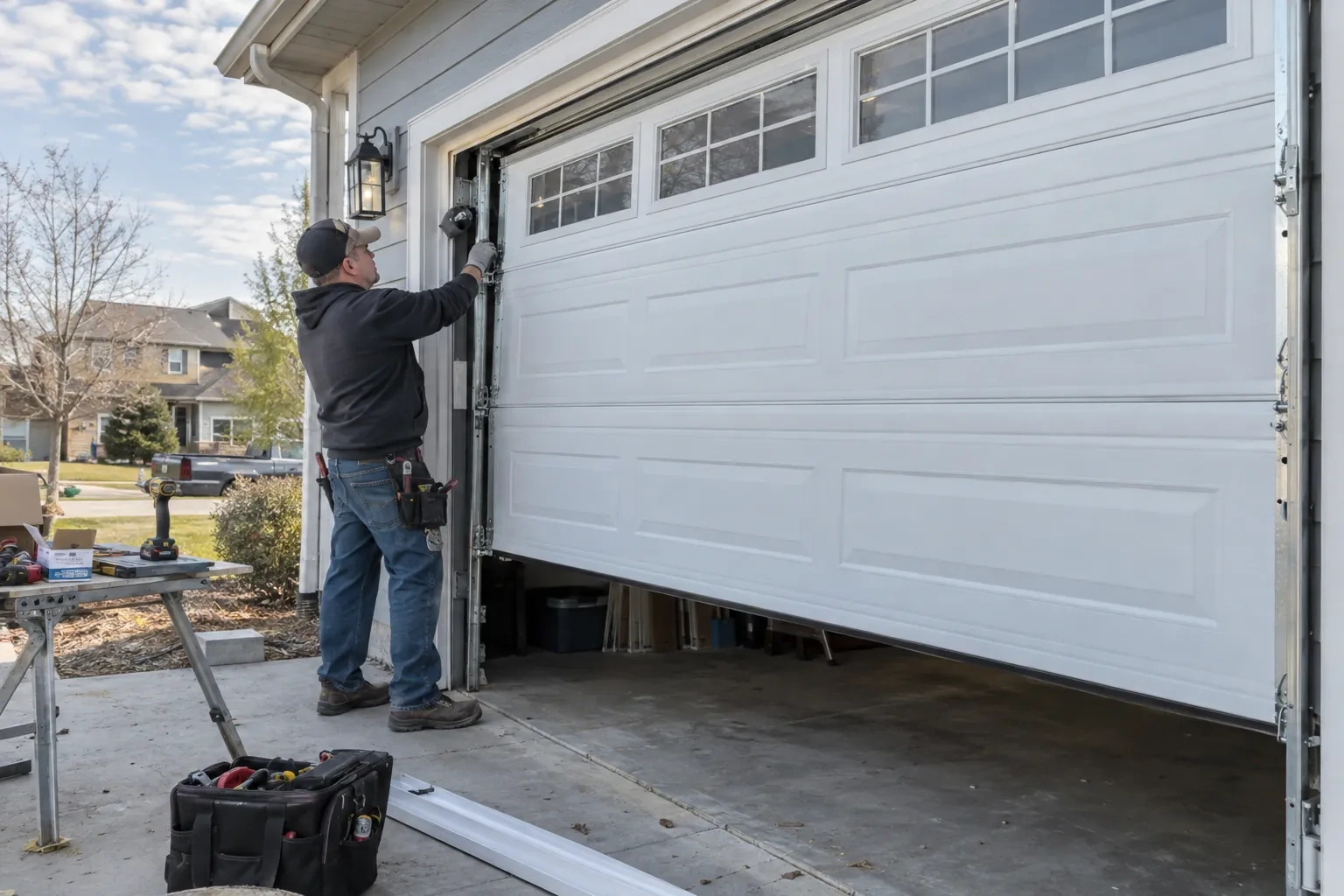
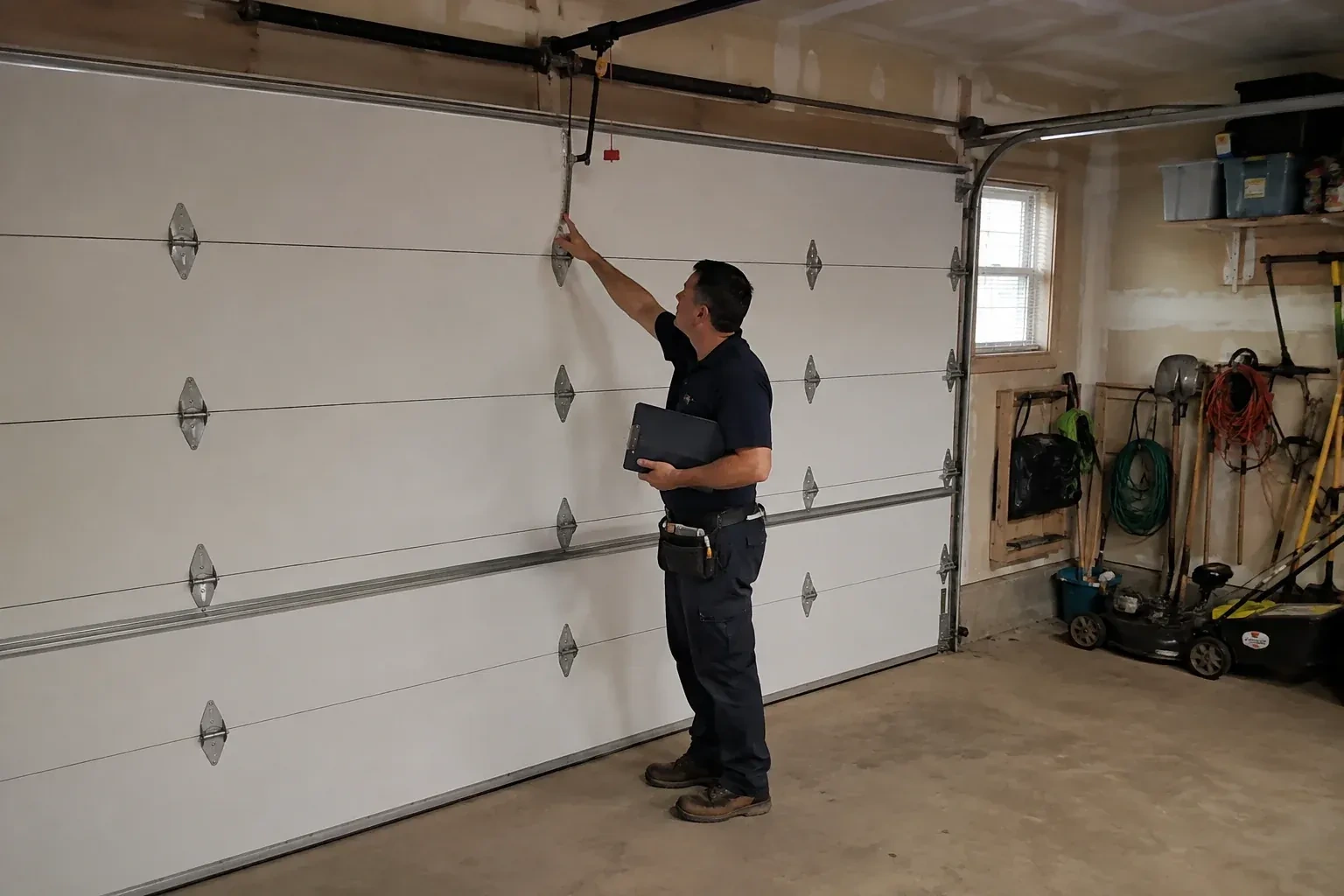
Off-track doors are really two problems in one, and the reset addresses both. The first is the visible one: a roller outside its rail and a door out of square. The second is the cause, which is often a slack or broken lifting cable, a worn roller, a bent hinge or a track bracket that has let go of the wall. Putting the roller back without fixing the cause invites a repeat within weeks. So the visit pairs the re-seating work with a whole-system check of cables, drums, springs, hinges, brackets and track geometry, and replaces the piece that started the trouble.
How the visit goesThe morning after a thaw the opener groaned, the door stayed stuck to the icy floor for a second, then lurched up crooked. It stopped halfway with a grinding scrape and has not moved since.
Off-Track Garage Door Reset · Newmarket
How the visit goes
- 1
Sections, stiles and hinges after the twist
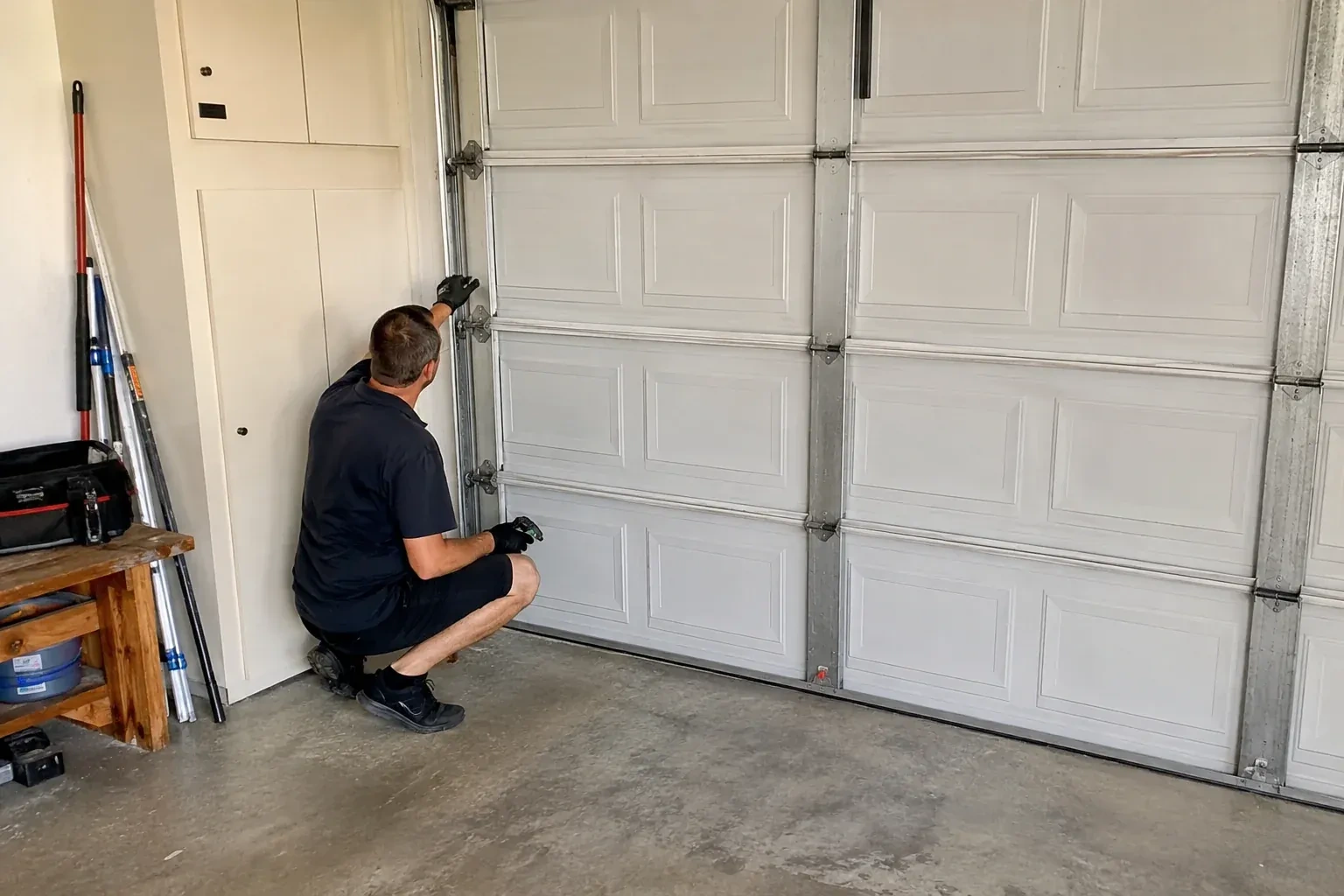
A racked door puts sideways force on parts that only ever expected to move up and down. The technician inspects each graduated edge hinge for bending, each end stile for cracks around the hinge screws, the bottom brackets for distortion and the top fixtures for a stem that has been pushed out of line. Steel sections are checked for creases at the roller positions and wood doors for splitting around hardware. This check separates a door that needs a straight reset from one that needs a hinge or bracket replaced first, so that the rollers go back into a section that can actually hold them.
- 2
Reconnecting the opener and re-teaching it the door
The last stage returns automatic operation. The trolley is reconnected, the manual slide lock disabled or removed, and the door run through several cycles from the wall control. Travel limits are reset so the door seats on the floor without pressing into it, and the force settings are brought back to the minimum the door needs, which on a balanced door is not much. Then the safety systems are exercised: the door must reverse off a 1.5 inch block laid in its path and must refuse to close when the photo-eye beam is broken. The remotes and keypad are checked, and the door is left cycling as smoothly as its hardware allows.
- 3
Knowing what caused it
The visit closes with a plain explanation of what let the roller go: an impact, a cable that slipped, ice on the threshold, a worn wheel or a bracket that had pulled from the wood. You are told what was reset, what was replaced and what was adjusted, and whether anything was left for a later decision, such as tired springs or a section with a crease that still works but will not improve. Knowing the cause is what lets you prevent a repeat, and it gives you a clear record if the door is ever assessed again or if an insurer asks what a vehicle strike involved.
In the van
- Track pliers
- Long lag screws or through-bolts
- Lifting cables, matched pair
- Bottom brackets
- Level and plumb line
What affects the quote
- 1
Time of the call
An evening, weekend or holiday visit to secure a door that will not close costs the same amount as a weekday appointment. The technician looks at how far the door has left its track before naming the figure, not at what time the call came in.
- 2
Size and weight of the door
A double door, an insulated door or a wood door carries more weight on every roller and cable, takes longer to support and reset, and uses heavier hardware. The quote reflects the door in front of the technician.
- 3
Opener reconnection and adjustment
Reconnecting the trolley, resetting travel limits and force, and testing the reversal are normally part of the reset. An opener arm, bracket or reinforcement damaged during the event is an additional item.
Same fees day, night or weekend.
Off-Track Garage Door Reset: questions
Why do rollers wear out, and how would I know?
Rollers turn thousands of times a year while carrying part of the door's weight, and their small ball bearings wear, fill with grit or fall out. Nylon tires can crack and steel wheels can wear flat spots or grind down to the stem. A worn roller squeals, wobbles in the rail or lets the door shudder at the curve. Replacing them as a set restores a quiet door and removes a common cause of a roller dropping out.
Can an off-track door fall?
A door with one cable slack and the springs still pulling on the other side is being held by parts that are not sharing the load, and it can shift or drop without warning, whether or not anyone touches it, if the second cable lets go or a roller gives way. That is why the visit begins with clamps on the track and support under the sections, and why people, pets and vehicles stay clear of the opening until that support is in place.
Can a door frozen to the floor really cause this?
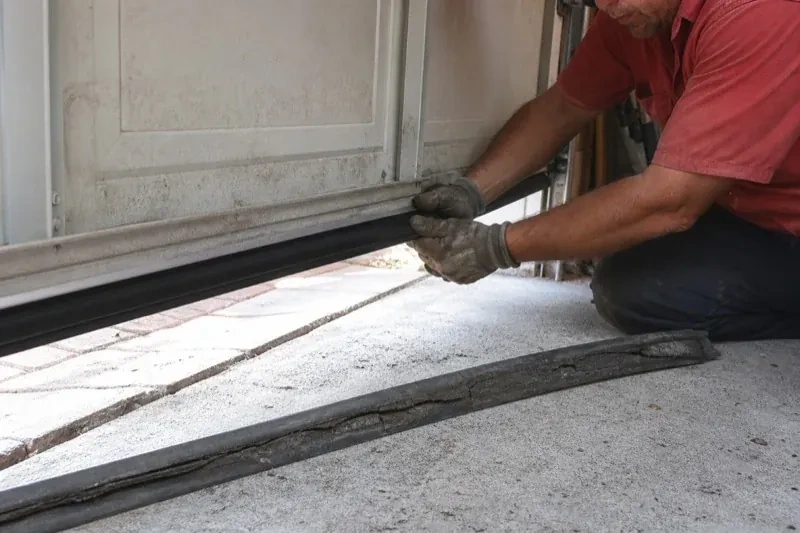
Yes, and in winter it is one of the most common causes. Meltwater under the bottom seal refreezes overnight and bonds the door to the slab. The opener pulls, the door stays put, the cables go slack and unwind off their drums, and when the ice lets go the door lurches up unevenly. Freeing the seal by hand before using the opener on icy mornings prevents almost all of these calls.
Repair & Maintenance
Bigger photo, sooner job: Emergency Book soon Plan ahead
Off-Track Garage Door Reset near you
York, Ontario
Newmarket information
- Town
- Newmarket, York, Ontario
- In business
- 28 years
- Hours
- Open 24/7 · nights, weekends and holidays, same fees
- Phone
- (289) 803-9939
- Visits
- On-site assessment preferred. Request a visit or call.
What the census means at the door
30%
Newer homes. About 30% of homes in Newmarket were built in 1980 or earlier, according to the 2021 Census.
Newer doors are built to tighter tolerances, so a small bend in a track or a loose bracket shows up sooner as a rub or a shudder. Regular tune-ups keep everything aligned and catch the wear on rollers and hinges before it affects the panels.
60%
A mix of homes. Single-detached houses make up about 60% of homes in Newmarket (2021 Census).
Mixed housing often means mixed access too: individual remotes and keypads on the houses, building fobs and shared gates on the condos. We program, clear and replace all of these, and keep property managers in the loop where a door serves more than one household.
Nearby
Open 24/7
Request a visit
A delivery van backed into the shop's overhead door this afternoon.
Call now · open 24/7(289) 803-9939- On-site assessment preferred
- Same fees day, night or weekend
- 28 years in business