Emergency Springs · Newmarket
Torsion Spring Replacement
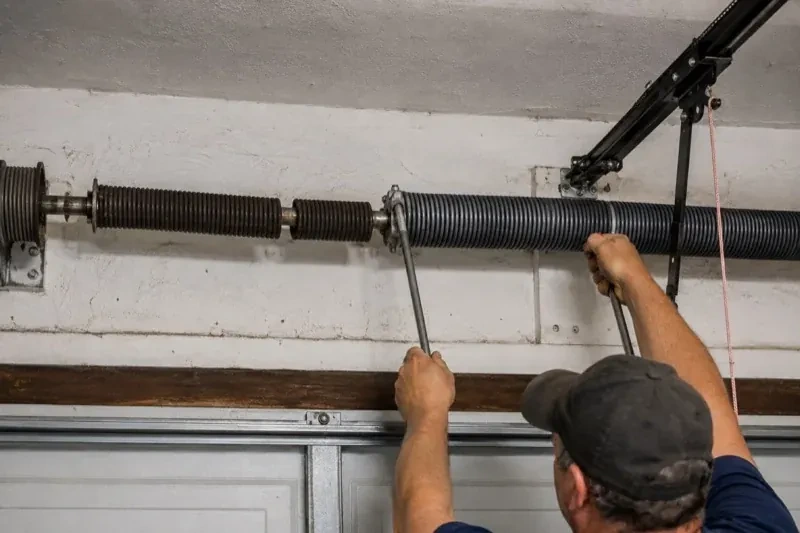
On a cold morning the remote does nothing useful: the light comes on, the motor turns briefly, the door stays shut. There may be a fresh crack in a rusty coil, and flakes of orange on the floor below the shaft.
Call now · open 24/7(289) 803-9939Right now
Before the door is looked at
Call (289) 803-9939, open 24/7.
When a spring breaks, the safe approach for the household is to leave the door where it is, keep people and vehicles clear, and avoid running the opener, which can damage the top section, the trolley or the gear drive.
Pull the manual release only when the door is fully closed unless a technician asks otherwise; a door disconnected while partly open can move on its own if the springs are out of balance.
Never drive a vehicle at a closed door to get out; the door collapses and the stored tension in the counterbalance is released. Use the release, the outside key release, or a technician.
In plain words
Think of the opener as a helper, not a lifter. It is built to push and pull a door that already weighs almost nothing thanks to the springs; asking it to hoist a full-weight door strains the trolley, bends the top section and wears the gear drive. Spring replacement puts the load back where it belongs. After fitting and winding the new spring, the technician balances the door, then reconnects the opener and resets its force and travel settings so it runs within its design limits. Owners usually notice the opener sounds calmer and the door moves more evenly afterwards.
How the visit goesAfter pulling the red release cord, you tried lifting the door yourself and it would barely leave the floor. A door that used to glide up with one hand now takes real effort, which points to the counterbalance rather than the opener.
Torsion Spring Replacement · Newmarket
How the visit goes
- 1
Making the door safe to work on
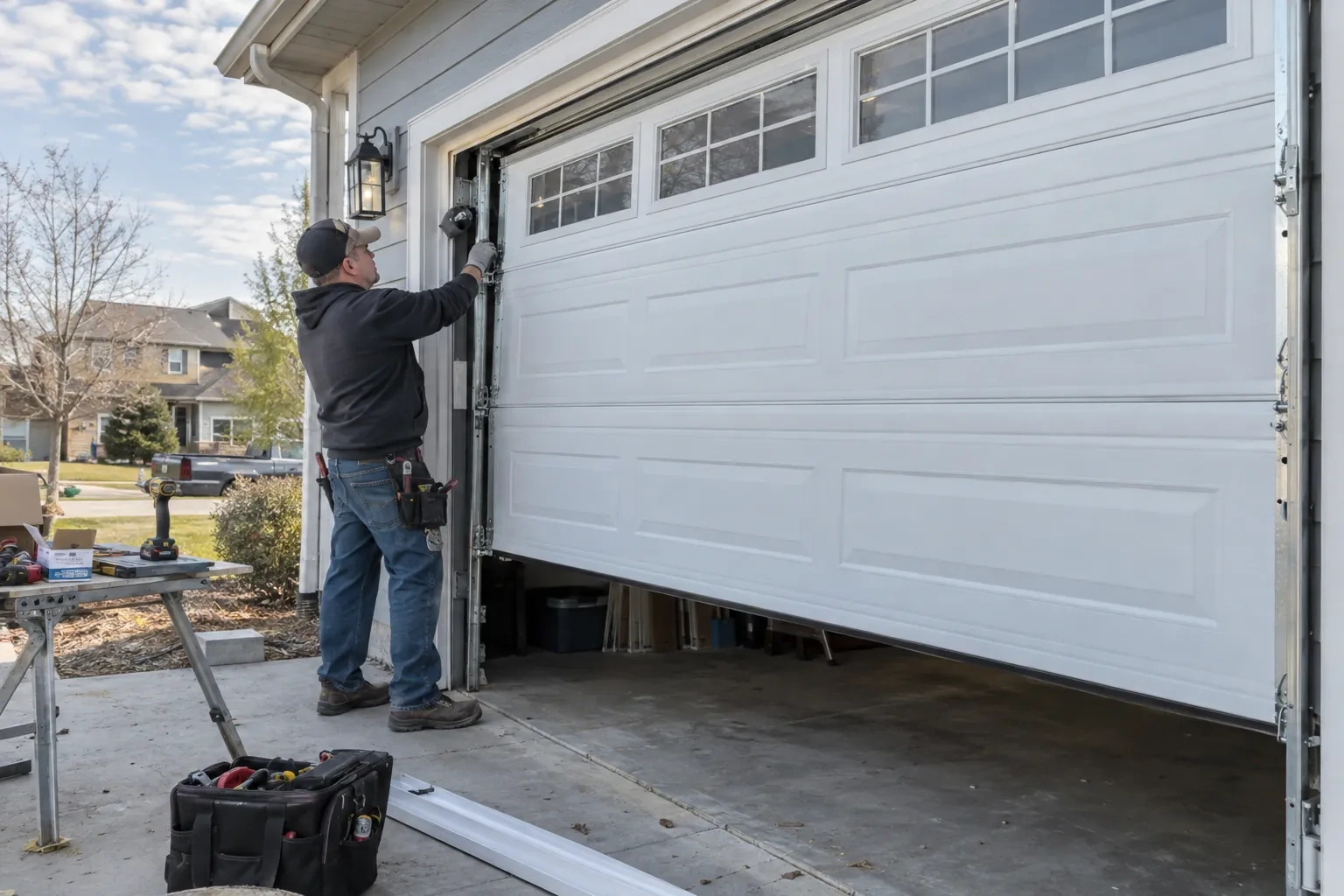
Before anything is measured or removed, the door and the opener are put into a controlled state. The opener is unplugged and the trolley released so the motor cannot move the door partway through the job. The door is brought fully closed, and locking pliers or clamps are set on the track just above a roller so the door stays down while spring tension changes. The technician clears the space beneath the shaft, checks that people and pets are out of the garage, and looks at where a vehicle sits so the ladder and winding position are safe.
- 2
Reconnecting and testing the opener
With the door balanced, the opener comes back into service. The trolley is re-engaged, power is restored and the door is run open and closed under motor. Travel limits are adjusted so the door seals at the floor and stops at the right height, and force settings are set to the light load a balanced door presents. The technician then places an object flat on the floor in the door's path and confirms the door reverses on contact, and passes a hand through the photo-eye beam to confirm the door reverses again. These checks close the visit on a working, safe system.
- 3
Signs worth noticing going forward
A healthy spring system is quiet and even, so changes stand out. Listen for a new grinding or popping sound as the door moves, watch that both sides of the door rise together, and look at the cables for fraying or a loop that has left the drum groove. Rust streaks below the shaft, a door that takes noticeably more effort by hand, or an opener that starts to strain are all early indicators that something in the balance system wants attention. Catching these early keeps repairs small and lets the household plan a visit rather than face a stuck door.
In the van
- Winding bars
- Locking pliers for the track
- Lift cables
- Wire gauge and tape measure
- Torsion shaft and coupler
What affects the quote
- 1
Centre and end bearings
With the shaft out, bearings that grind, wobble or have seized are renewed. Smooth bearings reduce the load on the spring and opener, and their condition is confirmed by hand during the check.
- 2
Spring finish
Oil-tempered and galvanized springs suit different garages. A coated or galvanized spring for a damp or salt-exposed space is a choice the customer can make when the specification is discussed.
- 3
Condition of the lift cables
Cables that show fraying, rust or a kink at the bottom brackets are replaced so the new spring pulls on sound steel. Two good cables mean this item stays off the list.
Same fees day, night or weekend.
Torsion Spring Replacement: questions
What about a garage with very little space above the door?
Low-headroom garages use a different arrangement: the spring assembly may be mounted at the rear of the horizontal tracks, or special low-headroom drums and track bring the door up with less clearance. Replacement follows the same principles, but the drums, cable routing and turn count differ. The technician identifies the system on arrival and brings hardware that suits it, so the door balances correctly in the space available.
Why does the door need to be balanced, and how is that tested?
Balance means the spring is holding almost exactly the door's weight, so the door neither flies up nor slams down and the opener only guides it. It is tested by releasing the opener, lifting the door to about waist height and letting go: a balanced door stays there. The technician fine-tunes in quarter turns of the spring until the door holds at several heights and travels evenly on both sides.
What does a cycle rating mean?
One cycle is a full open and close. Springs are built for a set number of cycles, and a standard residential spring is commonly rated around ten thousand. A household that uses the door six times a day reaches that in roughly four to five years, while a door used twice a day stretches the same rating much further. Higher-cycle springs use heavier wire and a longer coil to produce the same force with less stress, so they last proportionally longer.
Springs & Hardware
Bigger photo, sooner job: Emergency Book soon Plan ahead
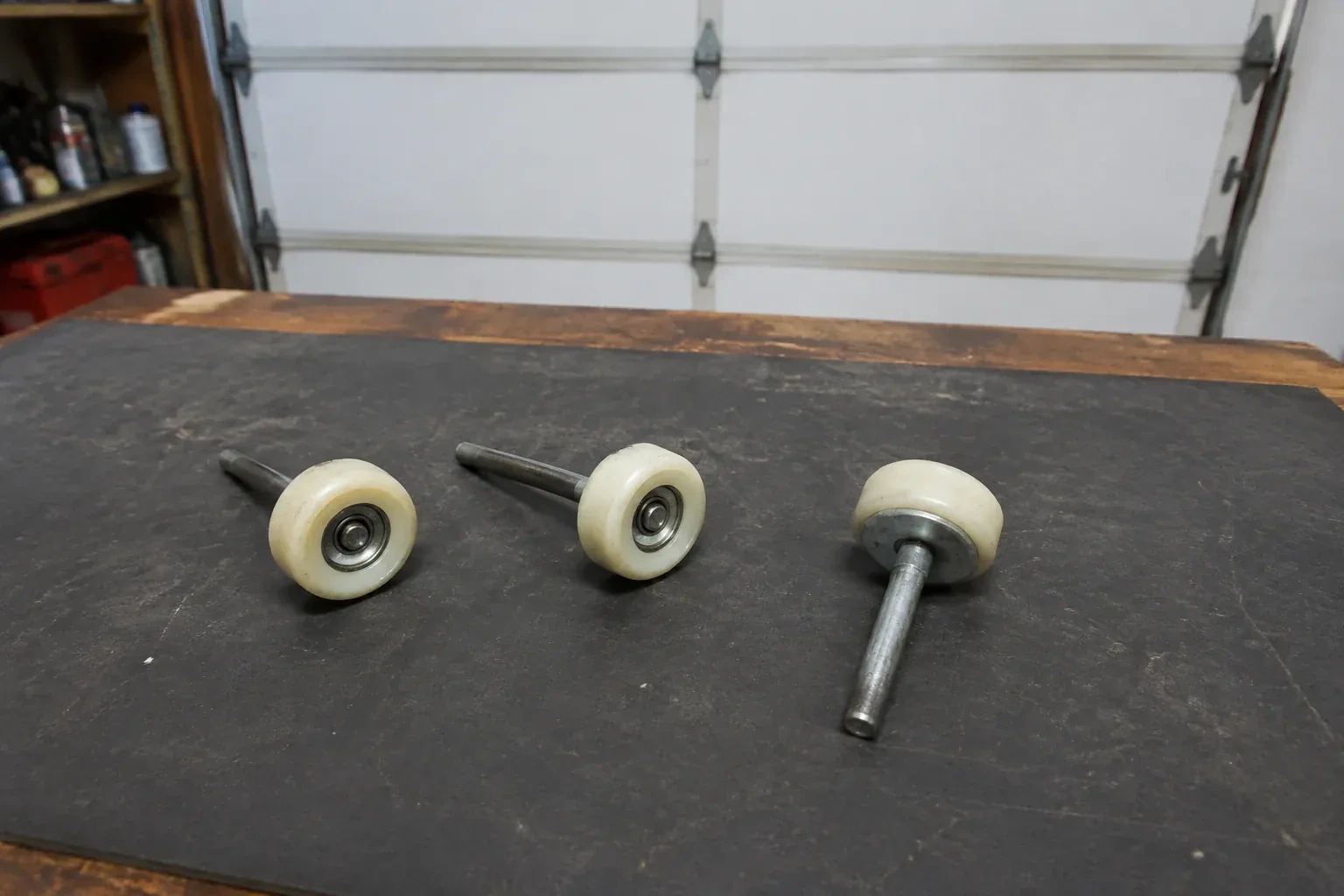 Book soonGarage Door Roller ReplacementNew springs went in last year and the door balances well, yet it still clicks along the ceiling track like a train over rail…
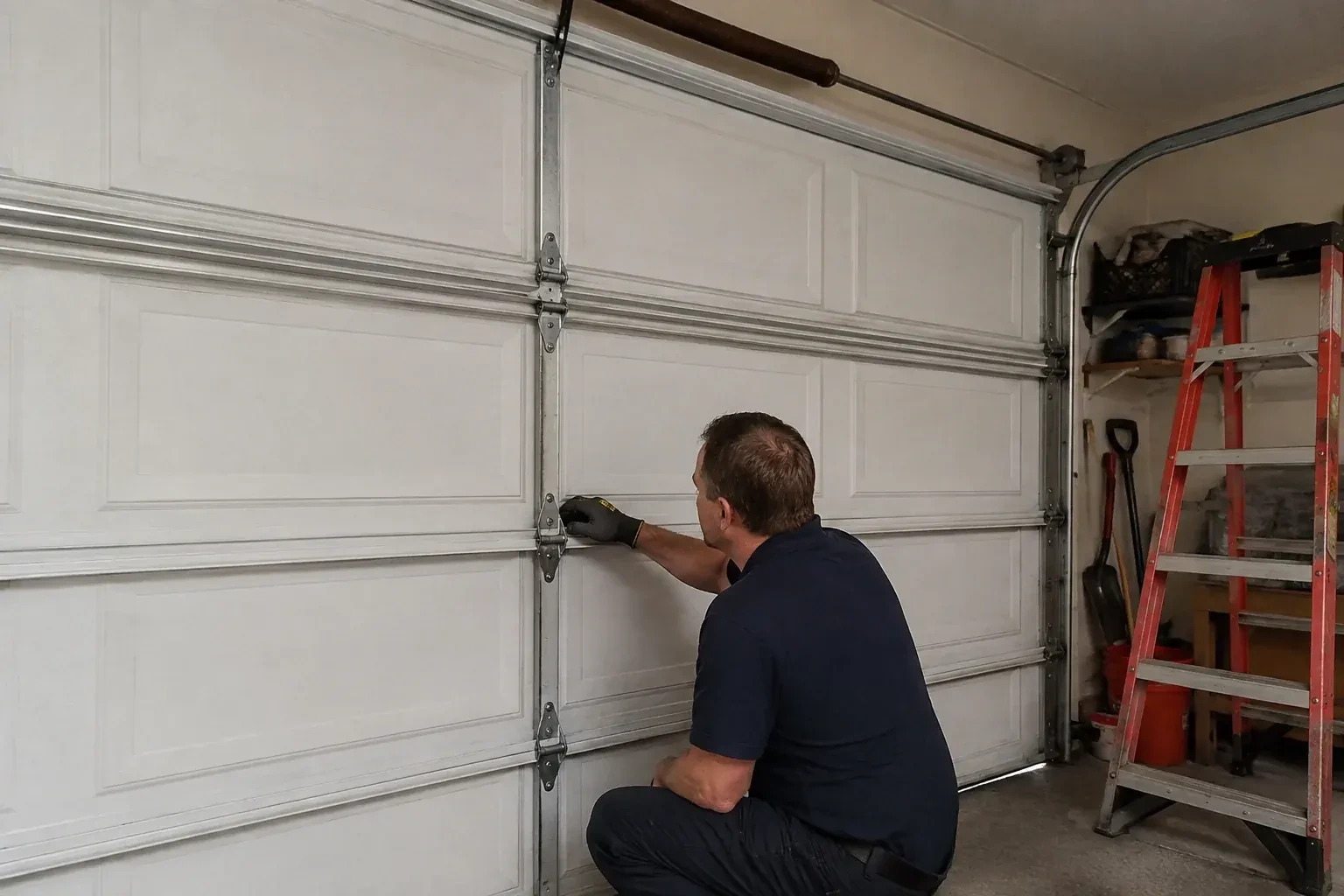 Book soonGarage Door Hinge ReplacementEvery time the door goes up there is a sharp pop from the same spot, about a metre off the floor, and the whole door gives a…
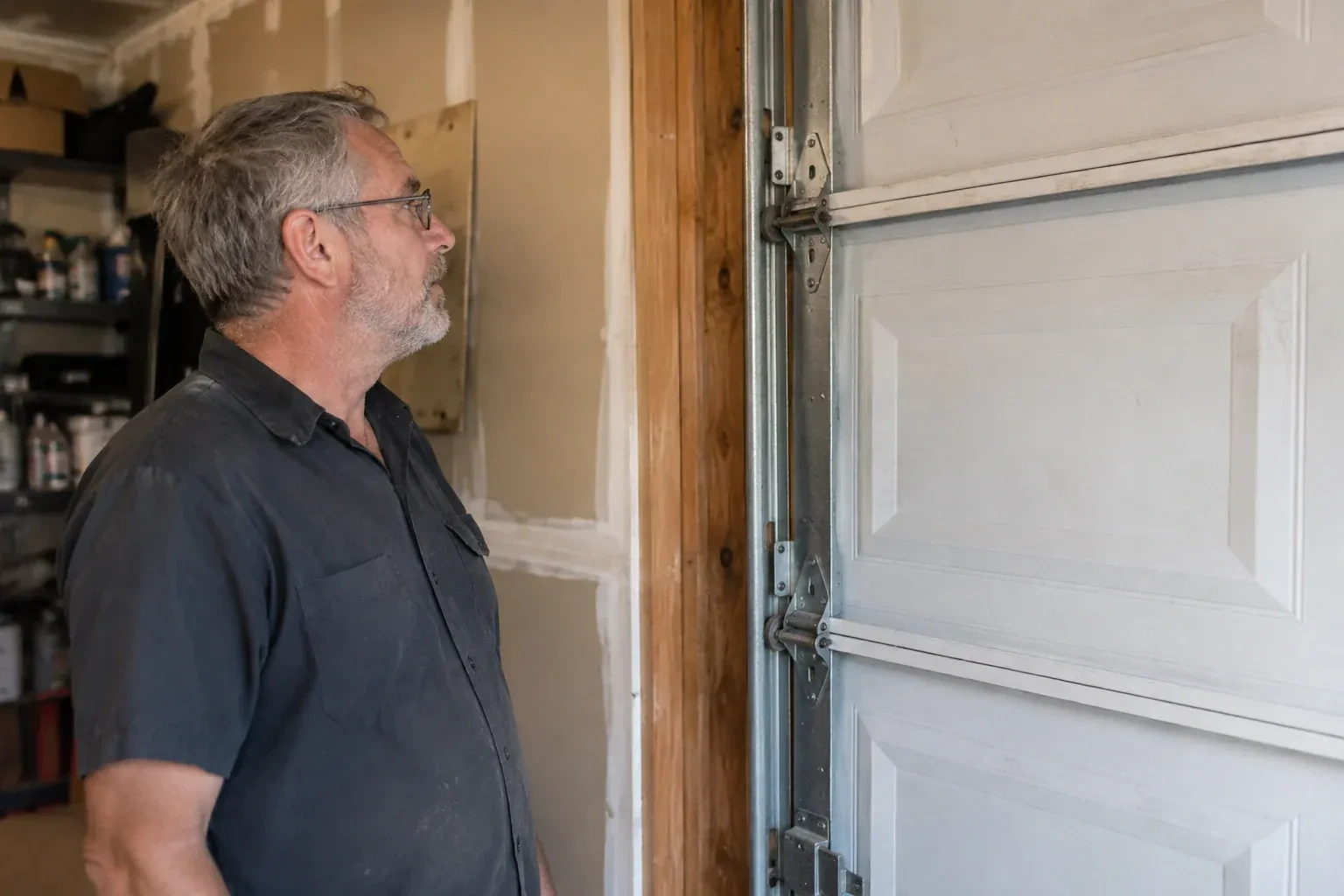 Book soonGarage Door Track Repair or ReplacementHalfway up, the door lurches and one roller rides onto the lip of the channel.
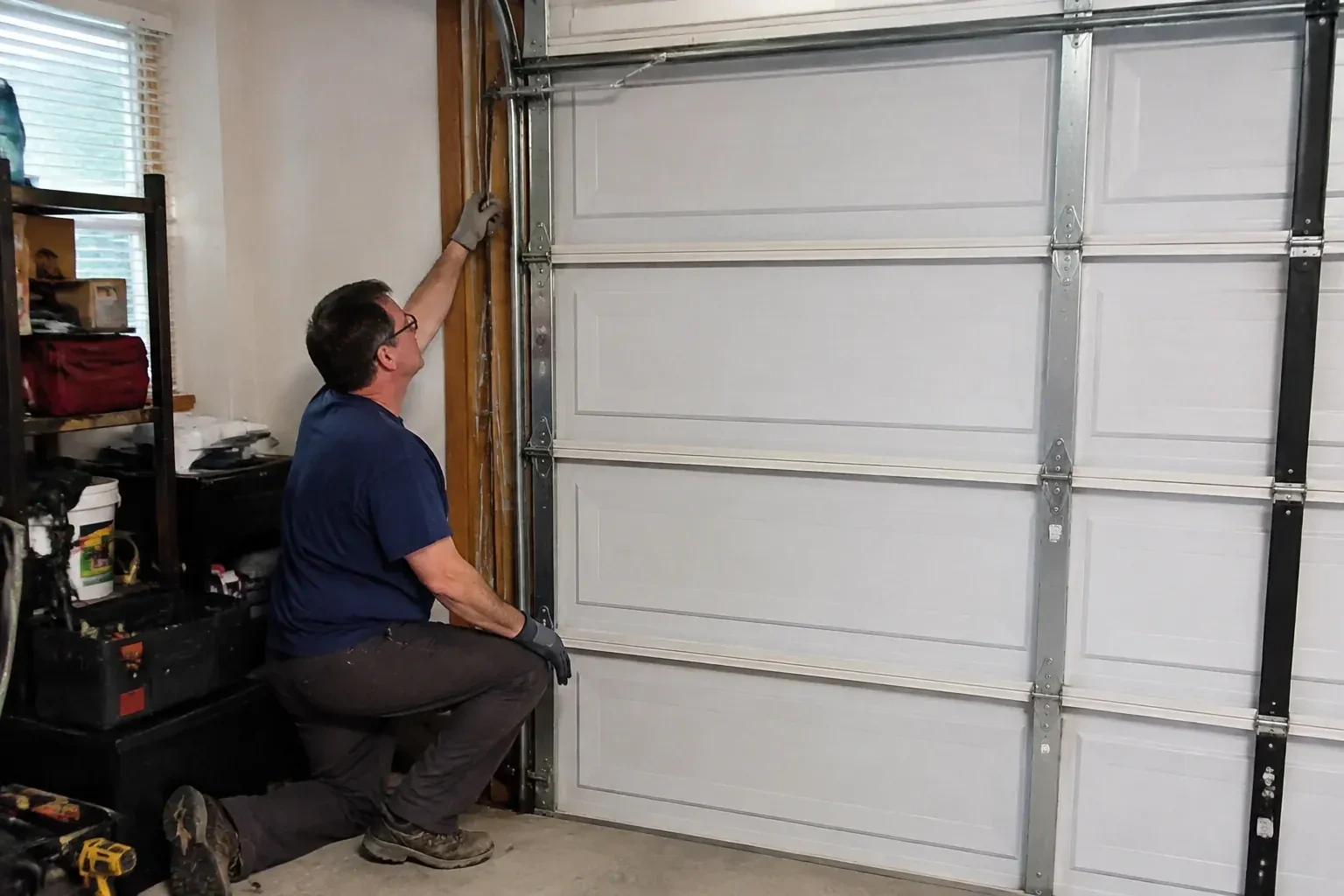 EmergencyGarage Door Cable ReplacementAfter years of slushy winters the cables look thinner near the bottom brackets, with rust streaks running down the door where…
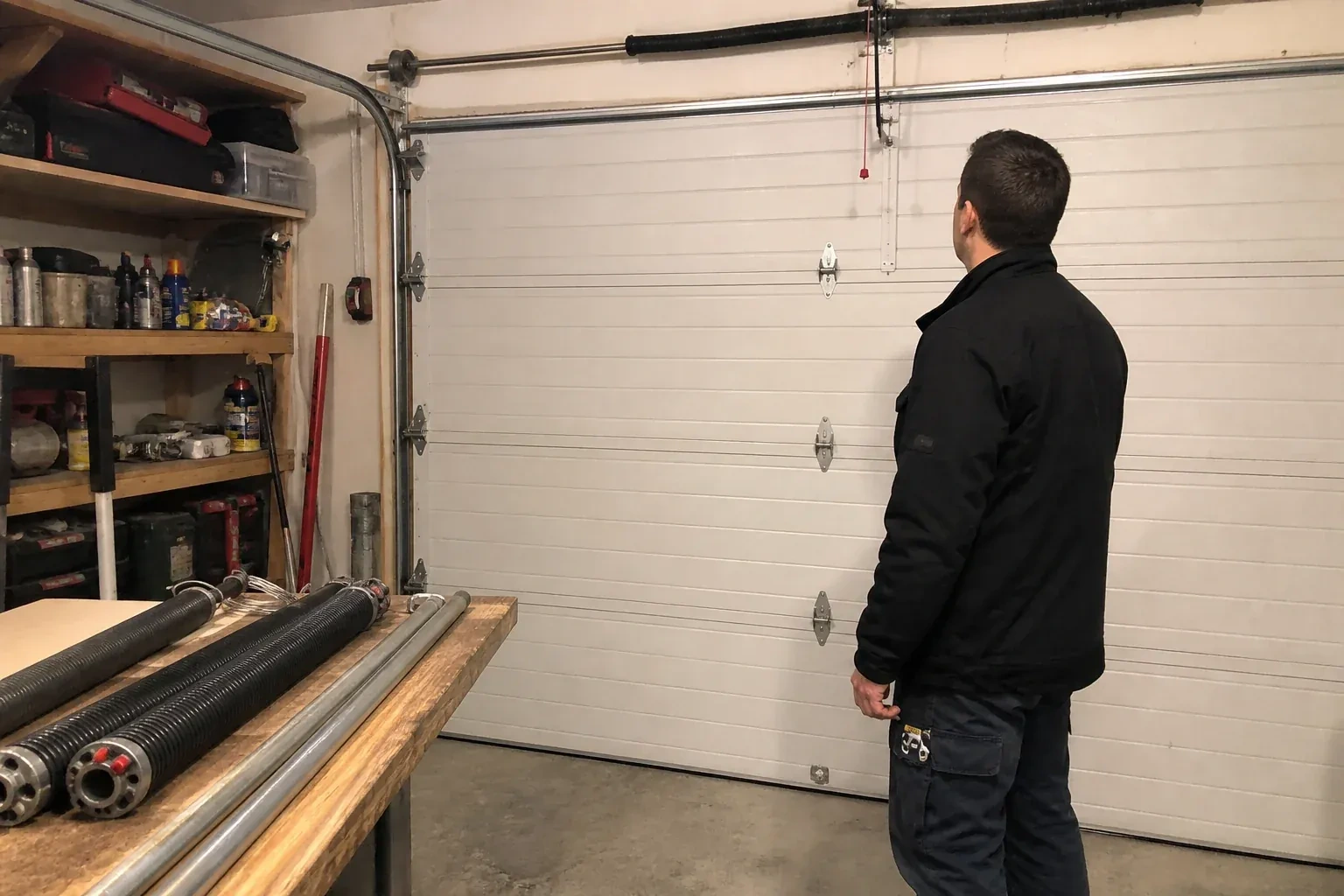 EmergencyExtension Spring ReplacementYou pulled the red cord to open the door during a power cut and it barely moved.
Torsion Spring Replacement near you
York, Ontario
Newmarket information
- Town
- Newmarket, York, Ontario
- In business
- 28 years
- Hours
- Open 24/7 · nights, weekends and holidays, same fees
- Phone
- (289) 803-9939
- Visits
- On-site assessment preferred. Request a visit or call.
What the census means at the door
30%
Newer homes. About 30% of homes in Newmarket were built in 1980 or earlier, according to the 2021 Census.
Newer doors are built to tighter tolerances, so a small bend in a track or a loose bracket shows up sooner as a rub or a shudder. Regular tune-ups keep everything aligned and catch the wear on rollers and hinges before it affects the panels.
60%
A mix of homes. Single-detached houses make up about 60% of homes in Newmarket (2021 Census).
Mixed housing often means mixed access too: individual remotes and keypads on the houses, building fobs and shared gates on the condos. We program, clear and replace all of these, and keep property managers in the loop where a door serves more than one household.
Nearby
Open 24/7
Request a visit
On a cold morning the remote does nothing useful: the light comes on, the motor turns briefly, the door stays shut.
Call now · open 24/7(289) 803-9939- On-site assessment preferred
- Same fees day, night or weekend
- 28 years in business